

Salt Cell Maintenance Guide
How to inspect, clean, and protect your salt chlorinator cell for reliable chlorine production and longer service life.
Your salt cell is one of the hardest-working parts of your pool system. It quietly converts dissolved salt into chlorine, helping keep your water clear, comfortable, and ready to enjoy.
AquaSolis salt and mineral chlorinators are built for Australian conditions, but even a well-built cell needs the right care. Balanced water, correct salt levels, good flow, and careful cleaning all help protect the titanium plates and keep chlorine production steady.
This guide explains how to maintain your salt cell properly, reduce scale build-up, avoid unnecessary wear, and recognise when a replacement cell may be needed.
Why Salt Cell Maintenance Matters
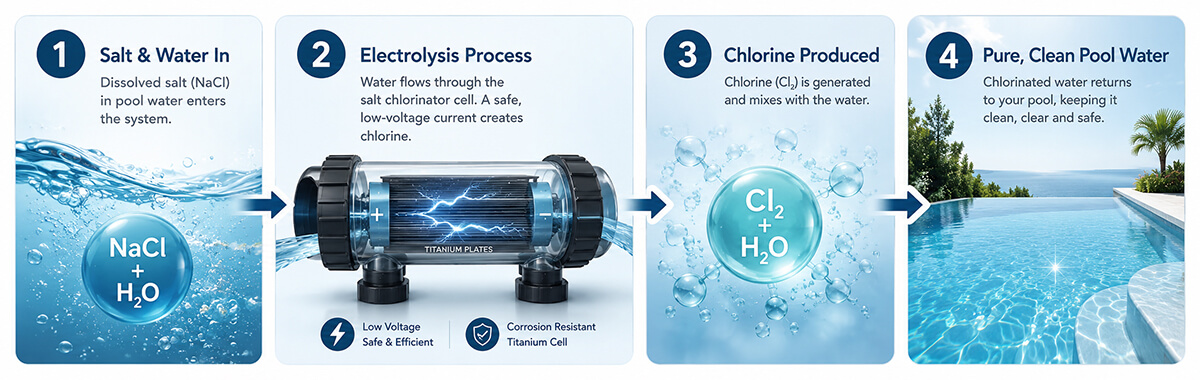
Inside the salt cell, a low-voltage electrical current passes through the titanium plates and converts dissolved salt into chlorine. During this process, calcium scale can form on the plates, especially when pH, alkalinity, calcium hardness, or salt levels are outside the recommended range.
If scale is allowed to build up, it can:
- Reduce chlorine output
- Make the cell work harder than necessary
- Increase electrical load and heat
- Trigger low salt or flow warnings
- Shorten the working life of the cell
The aim is simple: keep the water balanced, inspect the cell regularly, and clean only when scale is visible. This helps your chlorinator keep doing its job with less effort.
Recommended Water Balance for AquaSolis Chlorinators
Water balance is the most important part of salt cell maintenance. When your pool water is kept within the correct range, the cell can produce chlorine efficiently without excessive scale, heat, or strain.
For AquaSolis salt and mineral chlorinators, use the following guide:
| Parameter | Recommended Range | Testing Frequency |
|---|---|---|
| Free Chlorine | 1–3 ppm Maximum 4 ppm |
Weekly |
| pH - Concrete Pools | 7.4–7.6 | Weekly |
| pH - Fibreglass / Vinyl Pools | 7.2–7.4 | Weekly |
| Total Alkalinity - Concrete Pools | 80–150 ppm | Every 4–6 weeks |
| Total Alkalinity - Fibreglass / Vinyl Pools | 80–120 ppm | Every 4–6 weeks |
| Calcium Hardness - Concrete Pools | 250–300 ppm | Every 3 months |
| Calcium Hardness - Fibreglass / Vinyl Pools | 150–190 ppm | Every 3 months |
| Stabiliser / Cyanuric Acid | 30–60 ppm | Every 4–6 weeks |
| Salt Level - AquaSolis CLS+ Standard Models | 3000–4000 ppm 3500 ppm ideal |
Every 4–6 weeks |
| Salt Level - AquaSolis CLS+ Low Salt Models | 1200–1800 ppm 1500 ppm ideal |
Every 4–6 weeks |
Important: Low salt can damage the cell coating over time, while excessive salt can increase heat and electrical load. Always check the correct salt range for your specific chlorinator model.
Adding Salt Correctly
Correct salt handling helps protect your pool surface, pump, filter, and chlorinator cell.
- Add salt to the shallow end of the pool
- Brush the pool floor to help dissolve the salt
- Run the pump to circulate the water
- Do not allow salt to sit undissolved on the pool surface
- Never add salt directly into the skimmer box
For AquaSolis standard salt models, the general starting guide is approximately 3.5 kg of pool salt per 1000 litres of pool water. For AquaSolis Low Salt models, the general guide is approximately 1.5 kg per 1000 litres.
If using mineral or magnesium chloride blends, you may need around 20–30% more product to achieve the correct operating level.
Tip: Cold water naturally reduces chlorine output. This does not always mean you need more salt. In cooler months, chlorine demand is usually lower, so output and run time can often be reduced.
Practical Salt Cell Maintenance Schedule
A simple routine is enough for most pools. The key is to inspect regularly and clean only when needed.
Weekly
- Check the chlorinator display and warning lights
- Test free chlorine and pH
- Confirm pump run time suits the season and pool use
Every 4–6 Weeks
- Test salt level
- Check stabiliser and total alkalinity
- Adjust output if the weather or pool use has changed
Every 2–3 Months
- Visually inspect the cell
- Check for calcium scale or debris
- Clean only if build-up is visible
Seasonally
- Increase run time during hot weather and heavy use
- Reduce run time during cooler months
- Check that cable connections remain clean and secure
How to Inspect Your Salt Cell
Inspecting the cell helps you decide whether cleaning is actually required. Clear plates do not need cleaning.
- Switch the chlorinator timer to OFF
- Turn off power to the pump and chlorinator
- Unscrew the cell locking ring or unions
- Remove the electrode carefully
- Look through the plates using daylight or a torch
What to look for:
- White, chalky or flaky deposits: calcium scale is present
- Clear plates: no cleaning is required
- Debris lodged between plates: rinse carefully with fresh water
- Worn or damaged coating: the cell may be approaching replacement
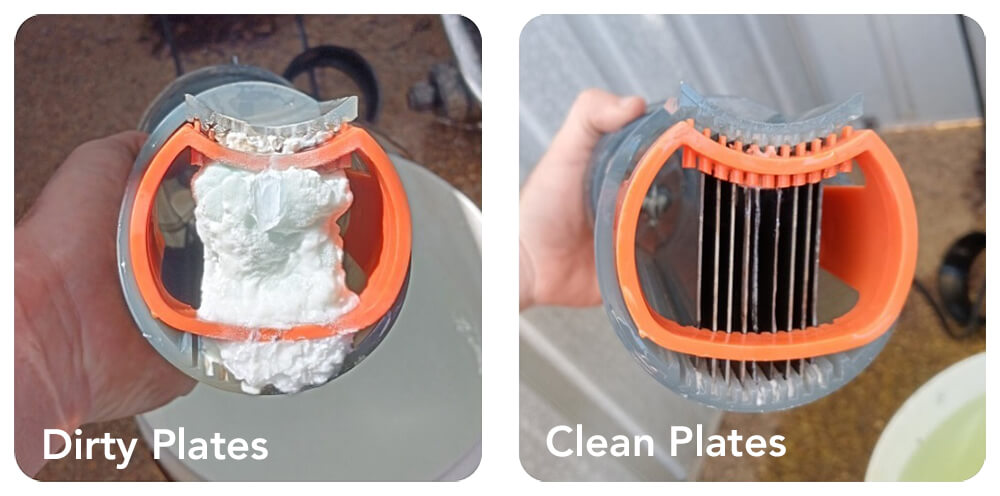
This example shows the difference between a heavily scaled salt cell and clean plates. If your cell looks like the clean example, refit it and resume normal operation. If white calcium scale is visible, cleaning may be required.
Checking the Cell Connections
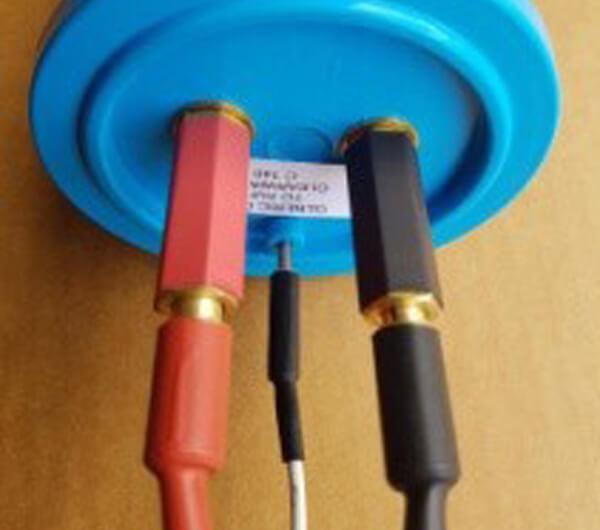
Any time the cell is removed, also check the plug, terminals, lead, and cable condition. A clean, secure connection helps prevent heat build-up and unreliable operation.
- Terminals should be clean and free from corrosion
- The cell plug should fit firmly into the cell cap
- There should be no damaged, loose, or exposed wiring
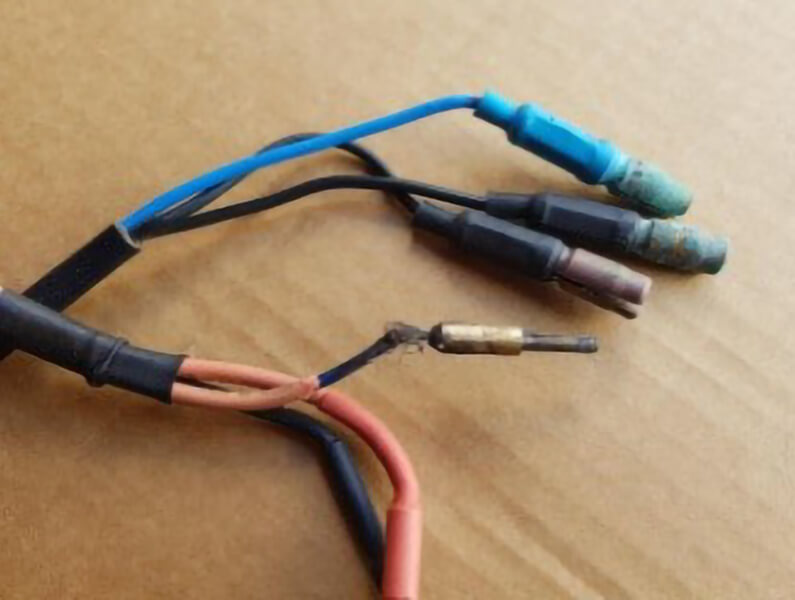
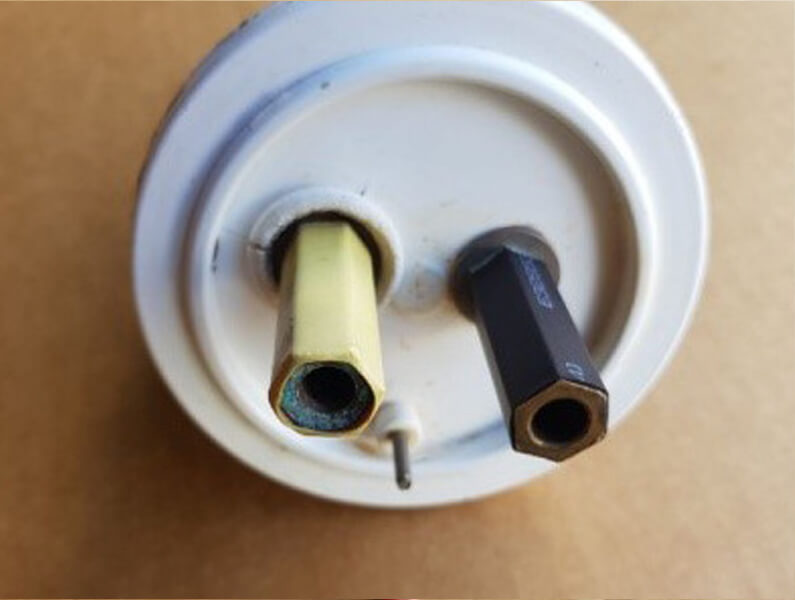
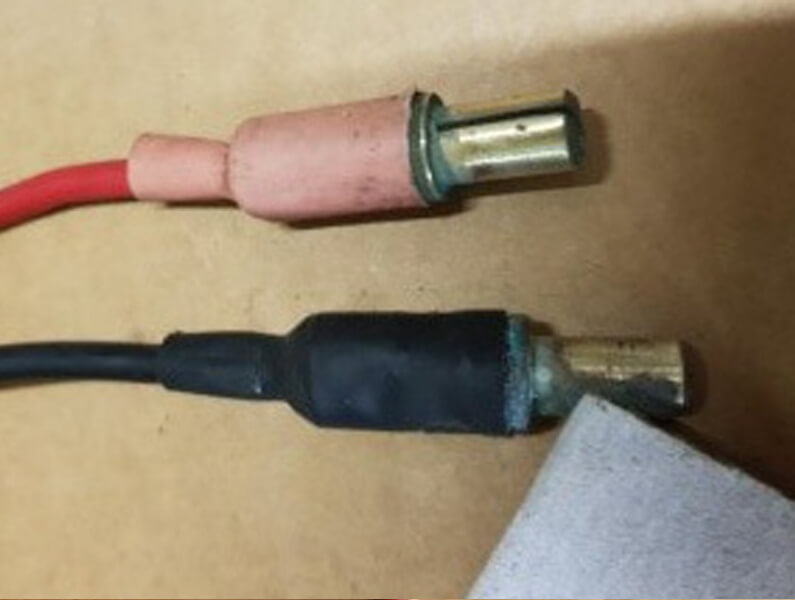
Mild warmth during operation can be normal. A connector that becomes very hot, loose, discoloured, or difficult to touch should be checked before continued use.
How to Clean Your Salt Cell Safely
AquaSolis self-cleaning chlorinators use reverse-polarity technology to help reduce calcium build-up. In hard-water areas or pools with unbalanced water, occasional cleaning may still be required.
Step 1: Turn the System Off
Switch the timer from AUTO to OFF so the pump and chlorinator do not start while the cell is removed.
Step 2: Remove and Inspect the Cell
Unscrew the cell locking ring by hand and remove the electrode carefully. Do not use tools to overtighten or force plastic fittings.
Step 3: Rinse First
If the build-up is light, rinse the cell with clean water. Do not scratch, scrape, bend, or force anything between the titanium plates.
Step 4: Use Cell Cleaner if Scale Remains
If calcium build-up is visible, use a dedicated salt chlorinator cell cleaner and follow the product directions.
Step 5: Acid Cleaning if Required
If using hydrochloric acid, mix 1 part acid to 10 parts water. For heavy calcium build-up, follow the cell cleaner instructions or seek advice from a pool professional. Always follow chemical safety instructions.
- Always add acid to water, never water to acid
- Wear eye protection, gloves, mask, and enclosed footwear
- Allow the solution to dissolve calcium deposits for around 10 minutes
- Rinse the electrode thoroughly with clean water
- Dispose of used cleaning solution responsibly and never into stormwater drains
Important: Frequent acid cleaning can shorten the life of the cell coating. Clean only when calcium scale is present.
Step 6: Refit the Cell
- Check that the O-ring is clean and correctly seated
- Use silicone grease on the O-ring if required
- Do not use petroleum-based jelly
- Refit the electrode into the cell housing
- Hand-tighten the cell locking ring
- Reconnect the cell lead firmly to prevent water entry
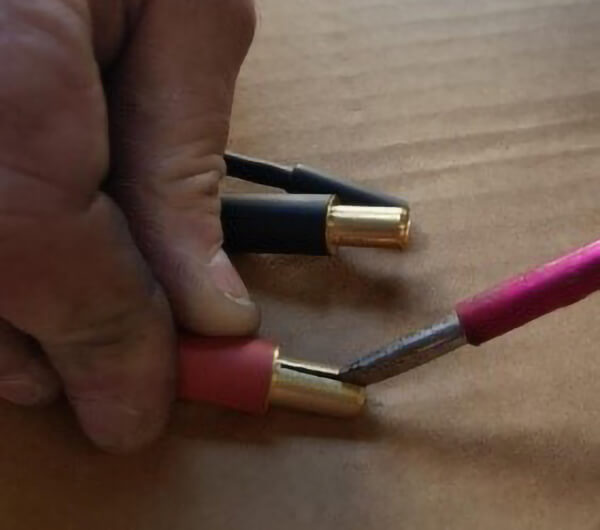
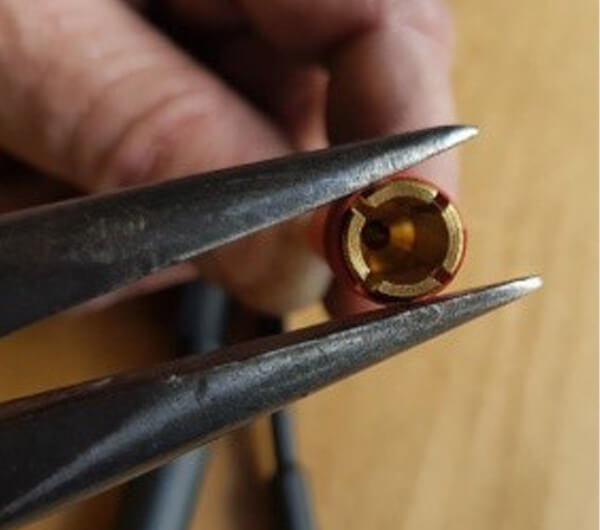
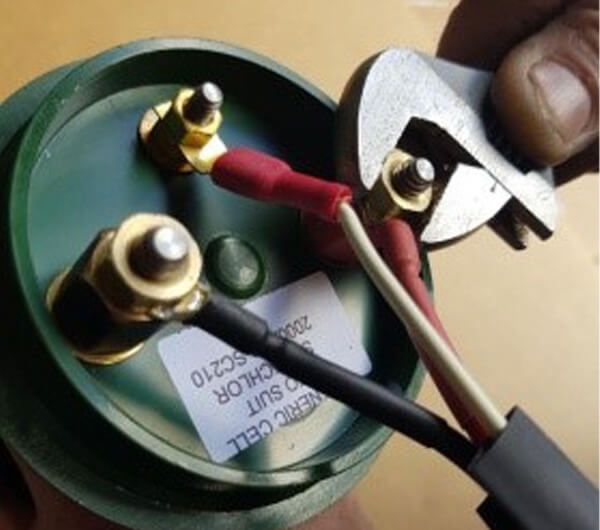
How to Extend Salt Cell Life
Salt cell life is influenced by water balance, salt level, run time, output level, calcium build-up, and electrical connection quality. These practical habits help reduce unnecessary wear:
- Keep pH within range so chlorine works efficiently and scale forms more slowly
- Maintain the correct salt level for your AquaSolis model
- Control calcium hardness, especially in hard-water areas
- Use stabiliser correctly to protect chlorine from sunlight
- Match output and run time to the season instead of running the cell harder than needed
- Inspect the cell regularly and clean only when scale is visible
- Keep cell connections clean and secure to prevent heat and unreliable operation
- Keep the power pack ventilated and away from chemical fumes, fertilisers, and enclosed corrosive spaces
These steps help the cell produce chlorine steadily while reducing scale, heat, and premature coating wear.
When to Use BOOST Mode
BOOST mode is helpful when the pool needs extra chlorine production for a short period. It is useful after heavy swimming, hot weather, rain, or when the pool has had a higher-than-usual bather load.
BOOST should be used as short-term support, not as a replacement for regular water balance. If your pool frequently needs boosting, test the water, check stabiliser, review run time, and inspect the cell.
When to Replace Your Salt Cell
Salt cells are consumable components. Even with good care, the coating on the plates gradually wears over time. Replacement becomes the practical option when normal maintenance no longer restores chlorine production.
You may need a replacement salt cell if:
- Chlorine output remains low even with balanced water and a clean cell
- Low salt warnings continue after the salt level has been professionally confirmed
- The plate coating appears worn, patchy, or damaged
- The cell works in one direction but not the other
- The cell is in the later stage of its expected service life
When choosing a replacement cell, match the correct brand, model, output, plate count, and self-cleaning or non-self-cleaning type.
Frequently Asked Questions
How often should I inspect my salt cell?
Inspect the cell every 2–3 months, or more often in hard-water areas, after heavy use, or if the chlorinator shows low output, low salt, or flow warnings.
How do I know if my salt cell needs cleaning?
White, chalky, or flaky deposits on the plates indicate calcium scale. If the plates are clear, the cell does not need cleaning.
Should I clean my salt cell on a fixed schedule?
No. Clean the cell only when scale is visible. Unnecessary acid cleaning can shorten the life of the titanium plate coating.
Can I scrape calcium off the cell plates?
No. Do not scrape, scratch, bend, or force anything between the plates. This can damage the coating and reduce the life of the cell.
What is the correct acid mix for cleaning an AquaSolis salt cell?
A common cleaning mix is 1 part hydrochloric acid to 10 parts water. Always add acid to water, never water to acid, and wear suitable protective equipment.
Why does my cell scale up quickly?
Fast scale build-up is usually linked to high pH, high alkalinity, high calcium hardness, poor water balance, or long run times at high output. Correcting water balance usually reduces scaling.
What salt level should I use for AquaSolis chlorinators?
AquaSolis CLS+ standard models operate at 3000–4000 ppm, with 3500 ppm ideal. AquaSolis CLS+ Low Salt models operate at 1200–1800 ppm, with 1500 ppm ideal.
Can low salt damage the cell?
Yes. Running with salt levels below the recommended range can strain the cell and damage the plate coating over time. Always test and correct salt levels before extended operation.
Can high salt damage the chlorinator?
High salt can increase electrical load and heat. If salt is above the recommended range, reduce output as directed by the manual or dilute the pool water by partially draining and refilling.
When should I replace my salt cell?
Replacement is usually needed when chlorine output remains low despite balanced water and a clean cell, when warnings continue after testing confirms correct salt levels, or when the plate coating is visibly worn or damaged.